UX Design
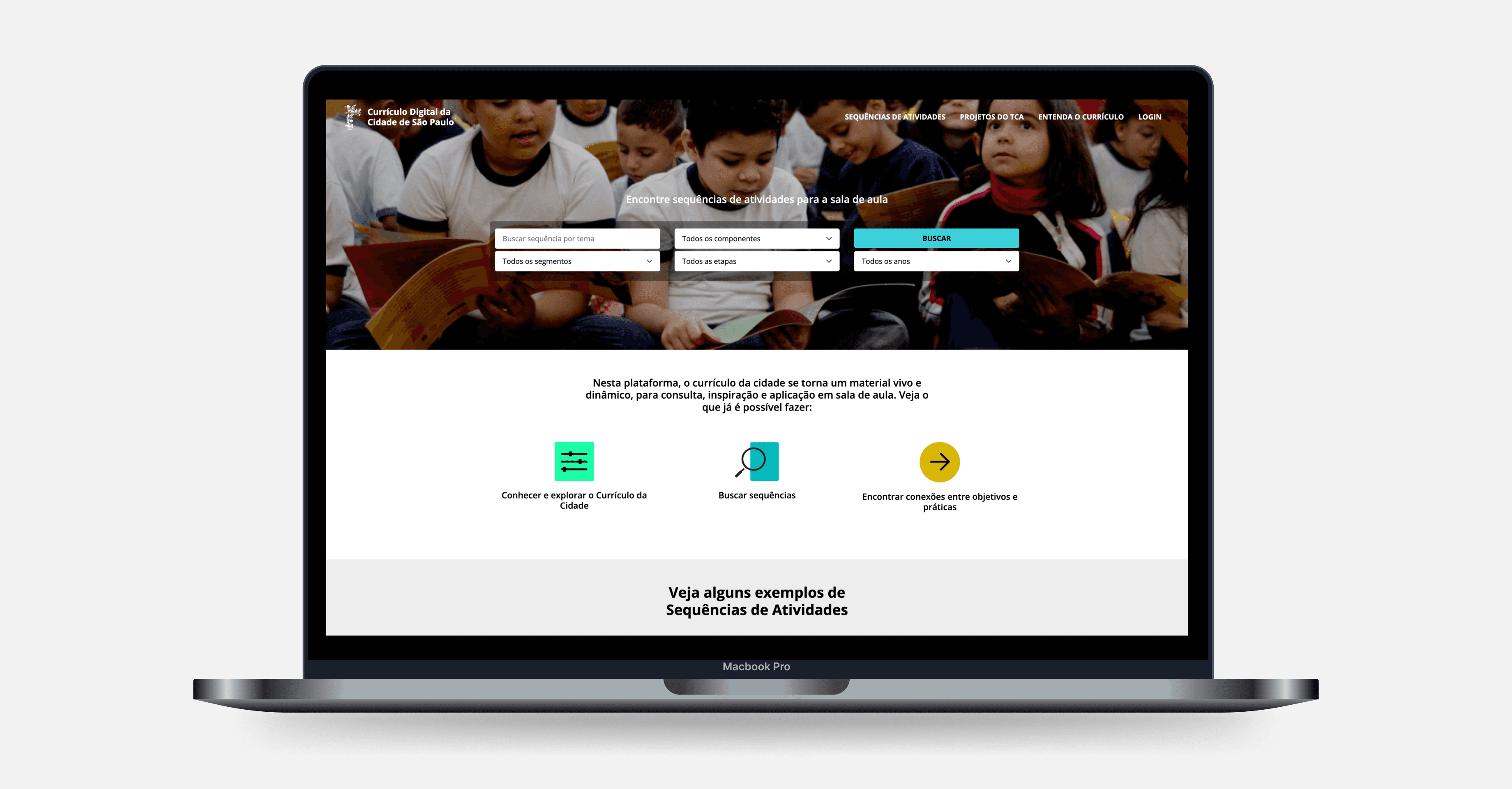
São Paulo Digital Curriculum
Designing the new curriculum for the Secretary of Education of the Municipality of São Paulo
context
The Secretary of Education of the Municipality of São Paulo announced on February 15th, 2018, the new curriculum to be followed in all the jurisdictional units. São Paulo is the first city to have a curriculum based on the new base. This curriculum covers skills known as socioemotional, which include creativity, empathy, autonomy, critical thinking, and problem-solving. Skills should be worked on in all areas.
The São Paulo New Curriculum includes several new additions to the National Common Curricular Base. These include gender equality, a focus on technology and new guidelines for teaching methods.
It also provides support materials for teachers that incorporate teaching guidance and ideas of creativity, empathy and openness to diversity.
The City Curriculum's main intention is to provide guidelines and directives for use in day-to-day school life to guarantee the learning rights of all students in the Municipal Education Network.
The São Paulo Digital Curriculum is guided by comprehensive education, understood to promote the development of students in all aspects (intellectual, physical, social, emotional and cultural) and their formation as subjects of rights and obligations. It is a pedagogical approach designed to develop students' full potential and prepare them to become people, professionals and citizens committed to their own well-being, people and the planet.
Initiative of the Municipal Department of Education in the city of São Paulo, in Brazil, for the implementation of an open government policy with three axes of action:
Transparency (Open data actions),
Innovation (Creating solutions to public problems)
Collaboration (Methodologies for interaction with society).
Core problem
The existing resources were difficult for teachers to access and navigate, making it challenging for them to effectively integrate new curriculum elements—such as gender equality, technology, and innovative teaching methods—into their daily classroom activities.
How to create an intelligent, inspiring and dynamic platform for the teachers to apply the new curriculum?
Main hypothesis
Providing a user-friendly and intuitive website for the São Paulo Digital Curriculum will help teachers easily access teaching materials and curriculum guidelines.
Process

To start designing the new platform for the new curriculum of the city of São Paulo, we had a 3-day-Design Sprint with stakeholders and other companies involved in the project, in order to come up with the best results possible. In the last day, we had the chance of testing it with the final customers of the new platform, the teachers from the public education system of São Paulo.
I was responsible for the design making decision, prioritizing which features would go first in the platform, creating the wireframes and interaction and interviewing the final customers. After this round up of understanding the customers' needs on our rough prototype, my role was to elaborate the complete wireframes for start being developed, together of the development team.


Scroll to see more
Impact
The curriculum was developed through a participative process involving teachers, students, and other educational stakeholders, with feedback gathered from thousands of educators and learners. It encourages collaboration and respects the existing educational practices within the community. It's still thriving since 2018 and being used by teachers and students in São Paulo.